
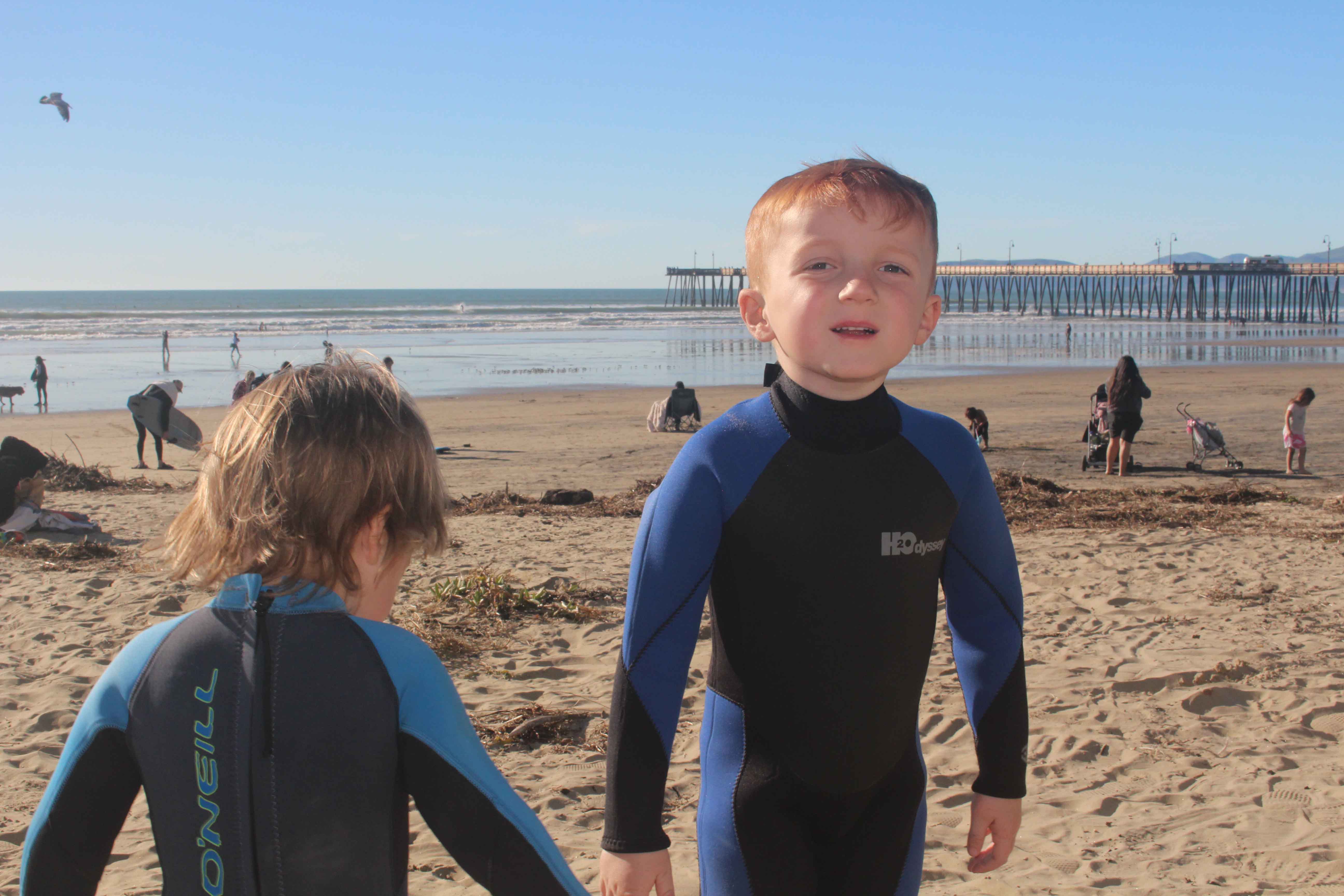
Why do humans love the ocean? Marine biologist Wallace J. Nichols believes that we all have a “blue mind” that is triggered when we’re in or near water. It is described as a “mildly meditative state characterized by calm, peacefulness”. A UK-based project called Blue Gym found that people who live near the coasts are generally healthier and happier. Psychiatrist and lipid biochemist Joseph Hibbelin of the National Institutes of Health has shown that across cultures there is a direct correlation between ounces of fish eaten each week and rates of depression. People love the ocean for many different reasons and whatever your reason, you’re probably not alone. Thirty seven percent of the worlds global population lives near the ocean and in California that number is even higher at sixty eight and a half percent.
Our coastal communities in California’s Central Coast thrive because of our big blue neighbor, the Pacific Ocean. We’re lucky to have world class beaches and I highly recommend you visit them with your kids. They will love Avila Beach, Pismo Beach, Morro Bay, Montaña de Oro State Park, Moonstone Beach, San Simeon, Piedras Blancas and Oceano Dunes. The best part is these beaches are all less than one hour’s drive from downtown SLO – a quaint town with plenty of great hotels and restaurants for visitors. Load ’em up, grab the wetsuits, surfboards, bodyboards, skimboards, handboards, fins and whatever other ocean toys you have and head to the sand.
In fact, if you time it right, you can even catch up with some professional surfers at the WSL SLO Cal Open which is a QS 3000 event running alongside the Junior Tour. This year on Jan. 23-29 in Pismo Beach. The event is sure to provide some excellent youth surfing. Then more surfers will face off at the SLO CAL Open in Morro Bay on February 23-26, 2023.
Great waves and a sandy shorelines await. But before you leave, be sure to finish reading my Do’s and Don’ts for a successful trip to the beach with kids.

Do’s
Bing Extra Clothes – Bring two sets of clothes, beach clothes and warm clothes. Even on beautiful sunny days the sea breeze can be really cold here. There’s nothing worse that strapping a sandy, wet kid in to a carseat so having an extra set of sweat pants and a warm shirt is a must.
Bring A Beach Tent – One way we beat the heat of the day or chilly afternoon breeze is with a beach tent. This has become a must-have item for my family. It is amazing how much more pleasant a trip to the beach can be when you can get some reprieve from the sun or out of the wind.
Bring Water – If you put a jug of water in your car you can use it to clean the sand off everyone, then use a grocery bag to put wet towels and clothes in on the drive home.
Make Sand Castles – Break out the buckets and sand toys because kids love building sand castles. My kids can occupy themselves for long stretches just playing in the sand, building, and creating fun structures and canals.
Check Out the Tide Pools – Keep an eye out for fun little sea creatures. The Central Coast is teeming with sea life big and small. California mussels, aggregating anemones, limpets, chitons, California sea hares, snails, crabs, fishes, lobsters, and octopuses all share central coast tide pools. For the best chance at seeing all of these creatures, time your visit with low tide.
Take Long Walks – Take advantage of this opportunity to wear your kids out. When I walk on the beach, my kids tend to run from new discovery to new discovery.
Look for Whales – Keep your eyes peeled because there are three main species of whales that frequent the California Central Coast: Gray whales; Blue whales and Humpback whales. Additionally, Killer whales (orcas) are often seen in Monterey Bay as the gray whales pass through in the spring.
Play Catch – Any nerf ball or frisbee will do the trick. This is another great way to run some energy out of your kids.
Apply Sun Protection – Any time you are in the sun for an extended amount of time you should apply some sunscreen. This is particularly important if you are playing in the waves. The reflection from the water makes the suns rays stronger. A hat and sunglasses are also advised.
Fly a Kite – This is a fun activity any time of year but if you happen to be in Morro Bay during the Spring be sure to check out the Morro Bay Kite Festival.
Watch Out for Sting Rays – Shuffle your feet when you are walking in the water or you could step on a round ray. If a stingray is in your path it will be more likely to swim away. If you step on one of these things, chances are you are going to be sorry. The sting of a stingray causes a bleeding wound that may become swollen and turn blue or red. It causes excruciating pain. Severe symptoms may include nausea, fever, muscle cramps, paralysis, elevated heart rate and seizures.
Dont’s
Don’t Walk on Sharp Rocks – On some beaches during low tide rocks become exposed. They are fun to walk around on and explore, but, unfortunately these can be very sharp and have the potential to cut soft little feet. One way to stay safe is to check out the tide pools with water shoes.
Don’t Swim Near Jellyfish – Don’t get too close to a jellyfish. In the water their tentacles can be difficult to see. Our most common type of jelly fish on the central coast is the Moon Jelly and it is typically about 10 inches long. The tentacles of a jellyfish release a poison that results in a skin irritation, in the form of a painful red rash that itches. The sting usually causes a sting mark along with pain and swelling, which may last several days to several weeks. Both jellyfish and stingray stings can cause life-threatening shock and allergic reactions.
Don’t Swim in Mirky Water – I hate to bring up sharks because it is my personal belief that they aren’t much of a danger to us. Recent drone footage shows great whites in close contact with people and being completely harmless. When shark bites do happen, it is usually during times of poor water visibility and likely a mistake on the sharks part. That being said, you might want to thing twice about swimming when the water is mirky.
Don’t Swim in Rain Runoff – The Department of Environmental Health recommends avoiding activities such as swimming, surfing, and diving for 72 hours after it rains. Runoff can bring high levels of bacteria into our coastal waters. It is better to avoid the ear aches and skin rashes all together by staying out of the water.
Avoid Strong Currents – Water moves in two directions in the ocean, horizontally and vertically. Horizontal movement like rip currents and tidal changes can pull you out to sea while vertical movement like downwellings can pull you under. Ability and experience matter, if you aren’t sure your child is ready, don’t risk it.
Don’t Under Estimate Tidal Swings – Because the Earth rotates through two tidal “bulges” every lunar day, coastal areas experience two high and two low tides every 24 hours and 50 minutes. High tides occur 12 hours and 25 minutes apart. This is important because when the tide rises you need to have an escape route planned to get away from the rising water especially when the beach backs up to a cliff.
Don’t Under Estimate the Waves – Keep an eye out for rogue waves while you are on the beach. Waves break in water depth which is 1.3 times the wave height. Another way to look at it is when the wave height is three-fourths of the water depth (H = > 3/4 D) the wave breaks. That means large rogue waves will break farther out than regular pulsing sets.
Don’t Dive Head First – Kids love to run down to the water and jump right in. Just be sure to warn your kids not to dive in head first. Submerged objects, rocks, and sand bars can cause problems and spinal cord injuries can occur when diving head first into the water.

Don’t Miss These Eateries – These are our favorite places to eat with the kids on the Central Coast and I think you’ll enjoy them too! Taco Temple, Mersea’s, Custom House, Schooners, Hoagies Sandwiches and Grill, Hofbrau, Splash Cafe, Li’l Harbor Hut.
People are drawn to the ocean for all sorts of reasons. For me, long days at the beach with my family are some of my favorite pastimes. If you are considering a trip to the Central Coast, I strongly encourage you to make time for a fun, relaxing day at the beach with your kids. These do’s and don’ts will go a long way in keeping your family safe while having an amazing day. Who knows, it just may trigger your “blue mind” experience.
Thanks for reading. If you made it this far please subscribe and follow me on Youtube, Facebook, or Instagram.
Here are some other topics that may interest you.
- 5 Rainy Day Activities for Kids
- A Sport For All Seasons | Youth Sizing Charts
- 2023 Guide | Teaching Kids How To Ride Dirt bikes
- Wine Tasting with Kids | 2023 Guide to the Central Coast
- Top 25 All-Time Best Toddler Books | Kiddo Approved
If you click on my affiliates/advertisers links, I may receive a small commission. I only highlight products I think are cool. AND… In turn, you have the opportunity to support this blog, Win/win.